Sludge removal systems
Removing spent abrasive from the cutting table tank.
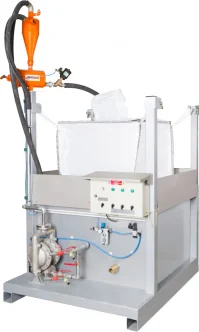
What does the equipment do?
Used abrasive and removed material accumulate in the tank during cutting. Planning sludge removal is part of daily operation and maintenance.
System selection depends on the tank shape, abrasive load, access, available space and downstream collection method. A manufacturer's maximum removal rate cannot guarantee the same result in every installation.
A sludge removal system removes or transports accumulated material. Recycling spent abrasive is a separate process with its own equipment and suitability requirements.
Selection criteria
| Factor | Details to confirm |
|---|---|
| Purpose | Removing spent abrasive accumulated in the tank |
| Sizing | According to the table, tank and operating load |
| Related considerations | Collection, settling, access and maintenance |
| Recycling | A separate process; not an automatic function |
Manufacturer documentation and technical references
PTV: abrasive removal system ↗For your enquiry
- Model of the existing machine and associated equipment
- Serial number, part number or description of the existing unit
- Current application, operating load and the change required
- Installation location and available connections
Sludge removal for an existing cutting table
Before retrofitting, check the tank dimensions, the extraction point and the space needed to change the collection bag. Photos from above and from the side can help us assess the layout.
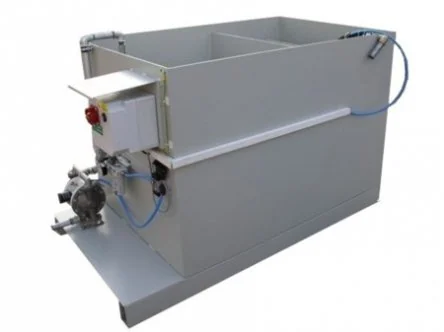
Can it be retrofitted to every waterjet table?
This depends on tank construction and available connections. Send the machine model, tank dimensions and a description of the current cleaning method.
Does sludge removal make the abrasive reusable?
Not by itself. Removal and abrasive recycling are separate tasks.
What determines the required capacity?
Daily abrasive consumption, the materials cut, tank design and operating pattern. These are the basis for sizing the system.
Find the right equipment for your machine
Send us the details of your machine and its associated units. These allow us to assess compatibility and the available configuration.