
Pure water cutting
Foam, rubber, paper, some textiles and food-processing materials
Material structure, moisture tolerance, hygiene and workholding requirements.
Materials you can cutAquatero Kft.
Pure water or garnet abrasive. We help you choose the cutting process and machine for your material, thickness and edge finish.
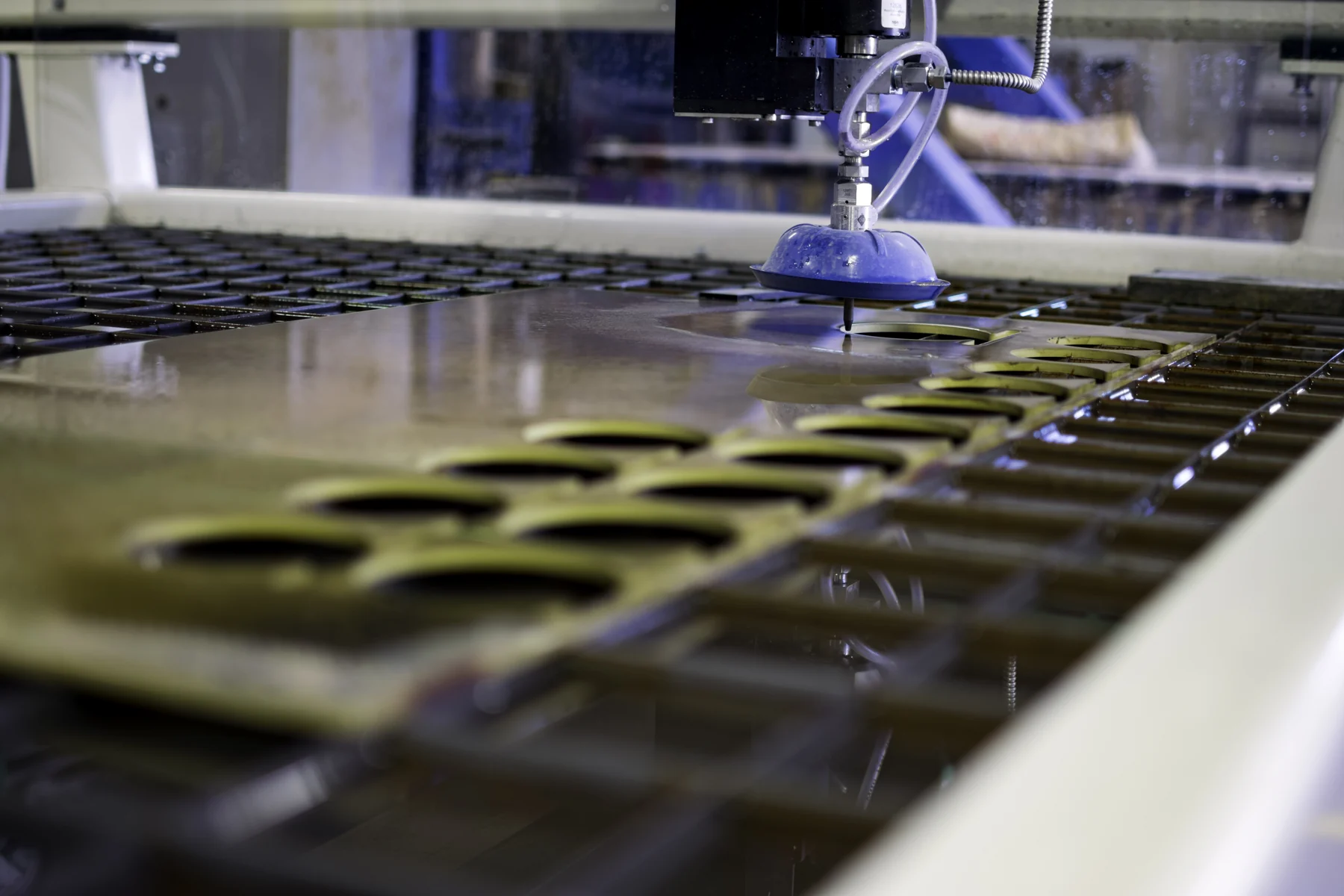 WARDJet · CC BY-SA 2.0 · resized for web
Pure water is mainly used for softer materials. For harder materials, the jet carries garnet particles.
Foam, rubber, paper, some textiles and food-processing materials
Material structure, moisture tolerance, hygiene and workholding requirements.
Materials you can cutMetal, stone, ceramics, glass and many composites
Material grade, thickness, piercing, cutting speed and edge quality.
Cutting abrasiveHigh-pressure water reaches the head through correctly sized pipework. Every component must be suitable for the operating pressure.
The energy of the waterjet leaving the small orifice removes the material. CNC controls move the head along the programmed path.
Particles added in the cutting head increase material removal. Garnet and water pass through the mixing tube to the workpiece.
The catcher tank absorbs the jet's energy and collects the water, spent abrasive and removed material particles.
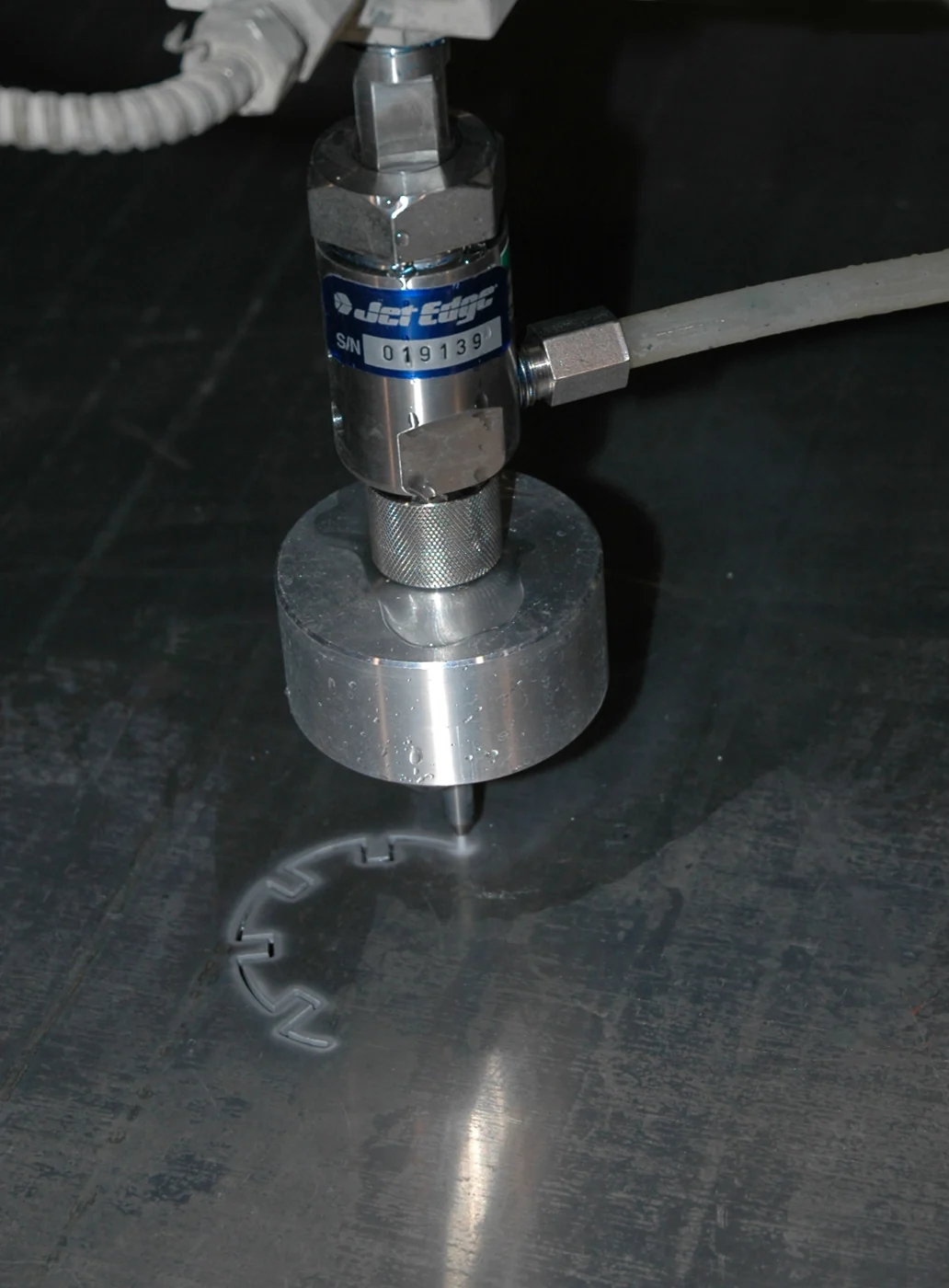
An advantage of waterjet cutting is that it does not melt the material as thermal processes do. This can be particularly useful for heat-sensitive or reflective materials. Appropriate workholding, cutting strategy and inspection are still required.
Machine positioning accuracy and finished part dimensional accuracy are different characteristics. The actual result depends on jet behaviour, head and nozzle condition, machine movement, material and the selected speed.
| Factor | Why it matters |
|---|---|
| Material and thickness | The same settings can produce different cutting times and edge quality in different materials. |
| Cutting speed | There may be a trade-off between cycle time and achievable surface finish. |
| Taper | The kerf can differ at the top and bottom of the sheet. A suitable system can compensate for this. |
| Piercing | The right starting strategy is particularly important for brittle or layered materials. |
The installation plan should cover space, electrical power and water supply, as well as water quality, compressed air, loading and tank cleaning. These requirements depend on the machine and configuration.
Spent abrasive can also contain particles of the cut material. Waste handling must match the actual composition and operating requirements; cutting does not automatically make all resulting material harmless or suitable for unrestricted discharge.
High-pressure system maintenance must follow the manufacturer's instructions and be carried out with the required qualifications. Never disconnect a pressurised fitting.
Discuss service and maintenance →Manufacturer documentation and technical references
Water quality and temperatureMaintenance and serviceBefore installation, review the supply flow, temperature, hardness and composition against the machine documentation. Suspended particles and excess dissolved minerals may require different treatment. Use measured values and the machine’s requirements to decide whether filtration, softening or cooling is needed.
For service, have the water treatment type, the last filter change date and any change in water quality to hand. Maintenance and service.
Terms you are likely to see in a quotation, a machine manual or a cutting report.
Many materials can be processed, but there is no unconditional guarantee. Brittle, layered, coated or moisture-sensitive materials must be assessed for the specific task. Where suitability is uncertain, trial cutting and technical discussion are appropriate.
Pressure alone does not guarantee performance. Available water flow, the orifice, pump, number of cutting heads and the task must be matched.
Edge condition depends on the process, material and settings. Specify the required quality and any finishing work in the quotation.
3D cutting requires a suitable tilting head, a compatible machine and software support. Not every table can be upgraded for 3D cutting.
Material grade, thickness, workpiece or sheet size, drawing, tolerance, edge quality and quantity. These help distinguish essential requirements from optional extras.
The material, thickness, part size and required tolerance help us narrow down the right machine.
